Exposed & Enamel Inlay Rings: A Complete Care Guide
Vansweden JewelersExposed and enamel-covered inlays are especially popular with couples who want something beyond a traditional polished metal band. Wood, stone, meteorite, carbon fiber, and other materials add depth and character, while enamel introduces rich color and a smooth, eye-catching finish. If you're shopping for matching wedding bands for couples, an inlay style is a great way to add a shared detail that still feels personal to each of you.
But there's something many people don't realize until after they've bought one: inlay rings often require more care than a solid-metal wedding band. They can also feel different on the finger. Some have natural texture and variation, while others are perfectly smooth. Certain inlays are more delicate than the metal around them, and exposure to water, chemicals, heat, or impact can affect their appearance over time. Understanding these differences before you buy can help you choose a ring you'll enjoy wearing for years.
What Is a Ring Inlay?
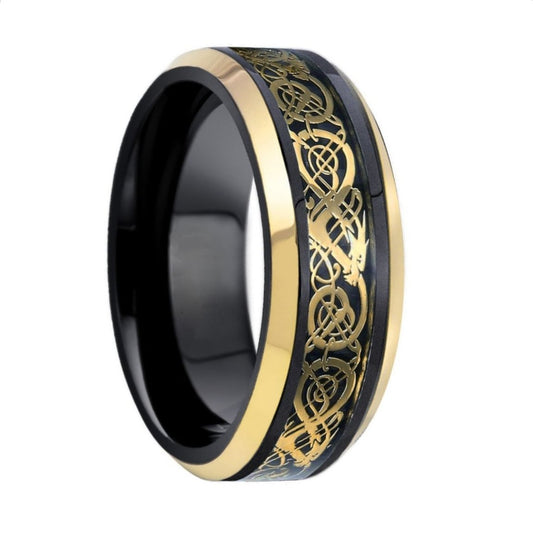
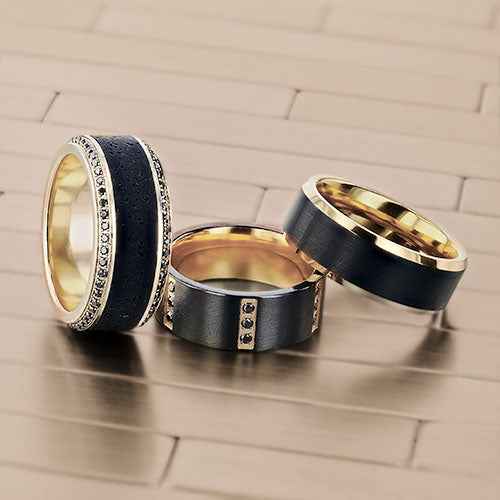
An inlay is a material set into a channel within the ring. Depending on the design, it may run through the center of the band as a wider feature, or appear along one or both edges, often creating contrast with gold, platinum, or another precious metal.
Adding an inlay creates a visual contrast that isn't possible with a traditional solid-metal band. A dark inlay can add contrast to a polished metal band, a look you'll also find in our men's black wedding bands. While a natural material like wood introduces variation that makes every ring slightly different.
Exposed vs. Enamel Covered Inlays
While these two styles can look similar at first glance, they behave quite differently day to day.
Exposed Inlays
An exposed inlay is visible and can be felt on the surface of the ring. Depending on the material, it may have a noticeable texture or variation. Wood can show natural grain, stone can have subtle differences in color and pattern, and other materials carry their own distinctive look.
Because the material is exposed, it can also be more susceptible to wear. The surrounding metal may be extremely durable, but that doesn't necessarily mean the inlay is just as tough.
Enamel Covered Inlays
Enamel inlays add color and a smooth finish, creating a clean, polished look that can range from subtle to bold. While enamel is durable enough for regular wear, it's more delicate than the metal around it. A hard impact can cause it to chip, crack, or wear over time.
If you choose a ring with an enamel inlay, treat the surface with a little extra care, especially during activities that could expose it to heavy impact or abrasion.
Texture and Comfort: What to Expect on Your Finger
Texture is a big part of what makes inlay rings stand out. Wood grain, brushed finishes, subtle stone patterns, and smooth enamel each give a ring a different feel in the hand, and no two exposed-inlay rings look quite the same. Some people love that character; others prefer the consistent feel of a polished surface.
That texture doesn't have to come at the expense of comfort, though. Many inlay rings have a smooth interior even when the exterior has a distinctive texture. Additionally, a softly rounded comfort-fit edge makes the ring easier to slide over the knuckle and more comfortable to wear all day. When choosing an inlay design, think about both how you want the ring to look and how you want it to feel on your hand.
Why Inlay Rings Can Require More Upkeep
One of the biggest surprises for new inlay-ring owners is just how much maintenance matters. A traditional solid-metal band can often tolerate a lot of everyday wear. Inlay rings tend to need a little more attention.
Depending on the materials used, you may need to protect the ring from:
- Harsh chemicals
- Cleaning products
- Prolonged exposure to water
- Chlorine
- Extreme heat
- Heavy impacts
- Abrasive surfaces
That doesn't mean you can't wear an inlay ring every day. It simply means you should be a little more mindful of what your ring encounters.
How to Care for an Inlay Wedding Band
Proper care starts with knowing what your specific ring is made from. As a general rule, keep the following in mind.
Remove Your Ring Before Household Cleaning
Cleaning products can be surprisingly harsh on certain inlay materials and finishes. Take your ring off before using bleach, strong detergents, solvents, or other household chemicals.
Be Careful Around Water and Chlorine
Occasional contact with water may be fine for some rings, but prolonged exposure isn't ideal for every inlay material. If your ring contains a material that can absorb moisture or react to repeated exposure, remove it before swimming, bathing, or doing dishes.
Take It Off for Heavy Work
If you're lifting, working with tools, gardening, or doing anything where your ring could take a hard impact, take it off. One accidental strike against a hard surface can damage a delicate inlay or enamel surface.
Store It Properly
When you aren't wearing your ring, keep it in a clean, dry place. A jewelry box or soft-lined ring case can help protect it from scratches and accidental impacts. Avoid tossing it into a drawer with other jewelry, where harder pieces can rub against the surface.
Clean Gently, and Know Your Materials
Cleaning methods vary by inlay material. For many rings, a soft, lint-free cloth removes everyday oils and fingerprints without unnecessary abrasion. Avoid harsh cleaners, polishing compounds, or aggressive brushes unless your jeweler recommends them. Don't assume a cleaning method that's safe for the metal is automatically safe for the inlay.
Inlay Ring Care at a Glance
- Exposed inlay: May need extra protection from impact and moisture.
- Enamel surface: Can chip or crack from hard impacts.
- Natural materials: May have specific moisture and cleaning requirements.
- Textured finish: Can collect oils and debris over time.
- Everyday wear: Remove before heavy work or harsh chemical exposure.
Who Are Inlay Rings Best For?
Inlay rings are a great option for anyone who wants their wedding band to have more personality than a traditional metal band. Inlay rings can have distinctive textures, contrasting materials, natural patterns, color, and contemporary designs.
However, if you're looking for a ring that requires very little thought once it leaves the jewelry store, a solid-metal band may be a better fit for your lifestyle.
Frequently Asked Questions About Inlay Rings
Can I Wear an Inlay Ring Every Day?
Yes, many people wear inlay rings daily without issue. The key is being mindful during activities that involve heavy chemicals, prolonged water exposure, or hard impacts, and removing the ring when needed.
Can a Damaged Inlay Be Repaired?
In many cases, yes. Depending on the material and the extent of the damage, a jeweler may be able to refinish, refill, or replace the inlay. It's always worth asking a trusted jeweler before assuming a ring can't be restored.
The Bottom Line
Exposed and enamel-covered inlays offer something traditional wedding bands can't always provide: texture, contrast, color, and character. That distinctive appearance comes with a responsibility to understand how the ring should be worn and maintained.
The key is choosing a ring that fits both your personal style and your lifestyle. If you're comfortable giving your ring a little extra attention, an inlay band can be a beautiful choice.
Find Your Perfect Wedding Band Today
At Vansweden Jewelers, you'll find wedding bands in a range of metals, finishes, textures, and designs. Whether you're drawn to the distinctive look of an inlay or prefer the simplicity of a traditional band, our collection makes it easy to find a ring that fits your taste and lifestyle.
Looking to purchase some unique men's wedding bands? Browse our collection of rings today!